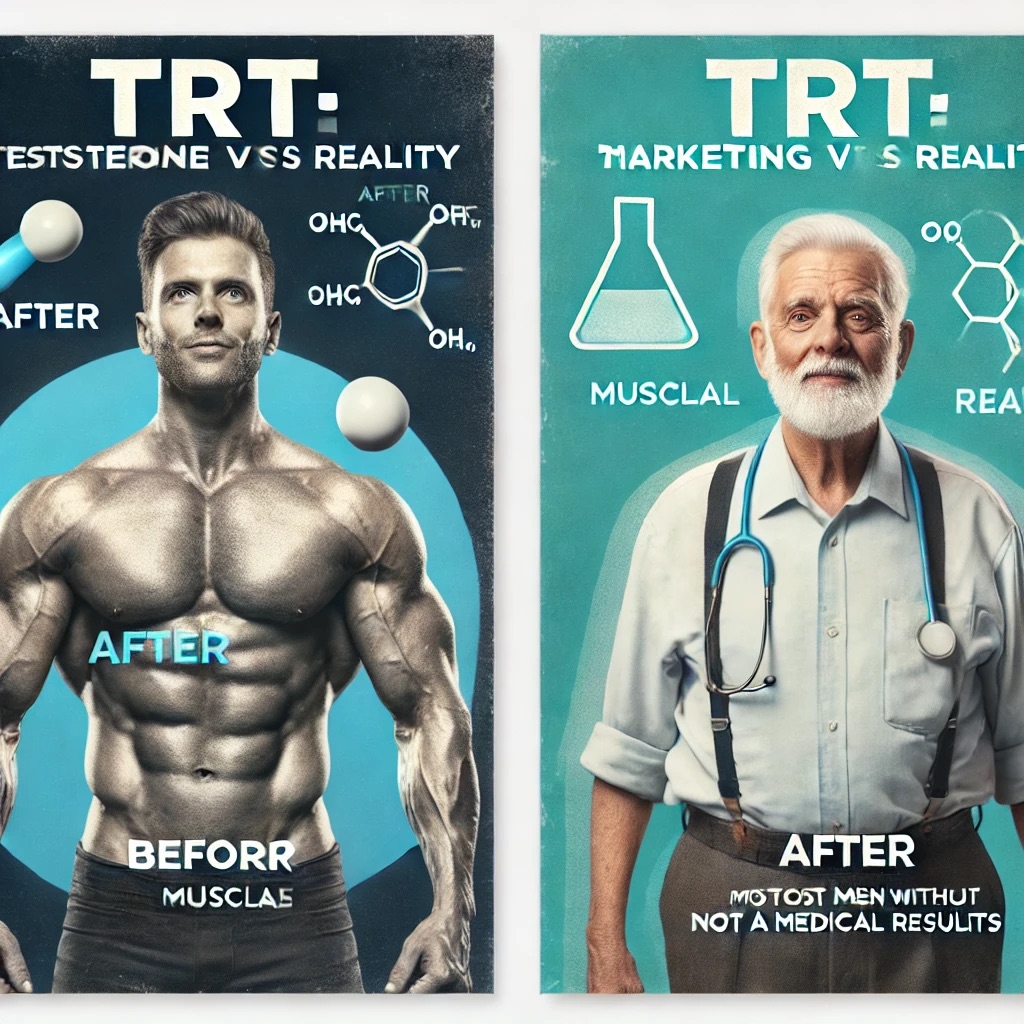
With testosterone replacement therapy (TRT) becoming a buzzword in many fitness and health circles, it’s easy to believe that it holds the key to maintaining youthful energy, muscle mass, and well-being. However, much of the hype surrounding TRT is based on marketing rather than solid medical science. In reality, TRT might not be the solution for most men, especially those who are not clinically diagnosed with low testosterone.
What Is TRT?
Testosterone replacement therapy is a medical treatment designed to increase testosterone levels in men diagnosed with hypogonadism, a condition in which the body is unable to produce sufficient testosterone. TRT comes in various forms, such as gels, injections, and patches, all intended to restore testosterone to a “normal” range.
For men with legitimate hormonal imbalances, TRT can provide significant benefits, including improved mood, energy levels, and even sexual health. However, for men whose testosterone levels fall within the normal range, the evidence supporting TRT is far less convincing.
The Medical Science Behind TRT: Limited Scope
TRT is FDA-approved only for men who have clinically low testosterone levels, which is a rare medical condition often caused by injury, testicular failure, or certain diseases. According to clinical guidelines, treating men without this diagnosis may expose them to unnecessary risks without offering substantial benefits.
According to a study by Morgentaler et al., TRT is a useful tool for treating men with diagnosed hypogonadism, but the authors caution against its use in men who do not meet this criteria (Morgentaler 4381-4403). For the average man who experiences the natural effects of aging, such as slower recovery after workouts or lower energy levels, TRT is not recommended.
The Risks of Unnecessary TRT
The risks of TRT in men without clinically low testosterone are significant. Research has shown that TRT can increase the risk of blood clots, cardiovascular disease, and prostate problems. For instance, a study published in the Journal of the American Medical Association found that testosterone therapy was associated with higher rates of heart attacks and strokes in men with pre-existing heart conditions (Vigen et al. 1829-1836).
Beyond physical health risks, the reliance on TRT can also undermine a person’s efforts to improve their lifestyle. Relying on artificial testosterone can distract from addressing the root causes of fatigue or low energy, such as poor sleep, lack of exercise, or stress. Healthy lifestyle changes, such as improving your diet, increasing physical activity, and managing stress, are more effective for long-term well-being and hormone balance.
TRT and the Placebo Effect
Another factor at play is the placebo effect. Many men report feeling better after starting TRT, even if their testosterone levels were already normal. This perceived improvement is often the result of expectation rather than a biological change. When patients expect to feel stronger and more energized, they may naturally experience a psychological boost, which may not be sustained in the long term.
Alternatives to TRT: Natural Ways to Support Hormonal Health
If you’re looking to naturally boost your testosterone or simply feel more energetic, here are a few scientifically backed tips that can help improve your overall well-being without the risks associated with TRT:
1. Get enough sleep: Poor sleep is one of the most common causes of low testosterone. Aim for 7–9 hours per night to maintain optimal hormone levels.
2. Exercise regularly: Strength training and high-intensity interval training (HIIT) are shown to increase testosterone levels naturally.
3. Maintain a healthy diet: Focus on whole foods rich in vitamins and minerals, such as zinc and vitamin D, which are linked to testosterone production.
4. Manage stress: Chronic stress elevates cortisol levels, which can lower testosterone. Mindfulness practices, yoga, and regular exercise can help reduce stress.
5. Limit alcohol and sugar intake: Both alcohol and sugar can have a negative impact on your testosterone levels if consumed in excess.
Conclusion: Think Twice Before TRT
Testosterone replacement therapy can be a powerful tool for men with medically diagnosed low testosterone. However, for the majority of men without this condition, the risks often outweigh the benefits. If you’re concerned about your testosterone levels or your energy levels, consult with a healthcare professional for a proper diagnosis and consider natural, sustainable lifestyle changes first.
MLA Citations:
• Morgentaler, Abraham. “Testosterone Therapy in Men with Hypogonadism: An Endocrine Society Clinical Practice Guideline.” The Journal of Clinical Endocrinology & Metabolism, vol. 101, no. 11, 2016, pp. 4381-4403.
• Vigen, Rebecca, et al. “Association of Testosterone Therapy with Mortality, Myocardial Infarction, and Stroke in Men with Low Testosterone Levels.” Journal of the American Medical Association, vol. 310, no. 17, 2013, pp. 1829-1836.
• Travison, Thomas G., et al. “Harmonized Reference Ranges for Circulating Testosterone Levels in Men of Four Cohort Studies in the United States and Europe.” Journal of Clinical Endocrinology & Metabolism, vol. 102, no. 4, 2017, pp. 1161-1173.
 Scorched Earth: AI Powered Fitness Revolution
Leave a comment